IA por la Identidad
AI for historical research and human rights.
- Technical leadership
- Knowledge graphs
- Research agents · MCP
- Spatial exploration
- Human review
IA por la Identidad brings together UBA, Abuelas de Plaza de Mayo and Quantit to develop AI tools supporting the search for people whose identities were stolen during Argentina’s last dictatorship.
As AI Tech Lead, I help shape an agentic research environment built on a shared knowledge layer, connecting historical sources, structured information, domain expertise and tools for investigation. I guide technical decisions across projects and work with development teams and Abuelas to ground that environment in research needs.
Nexo-Memoria
Research & development · 2025–present
Nexo-Memoria is a collaborative project supporting Abuelas de Plaza de Mayo by connecting information from Argentine court rulings on crimes against humanity. It is part of IA por la Identidad and also the subject of my master’s thesis at Universidad de Buenos Aires.
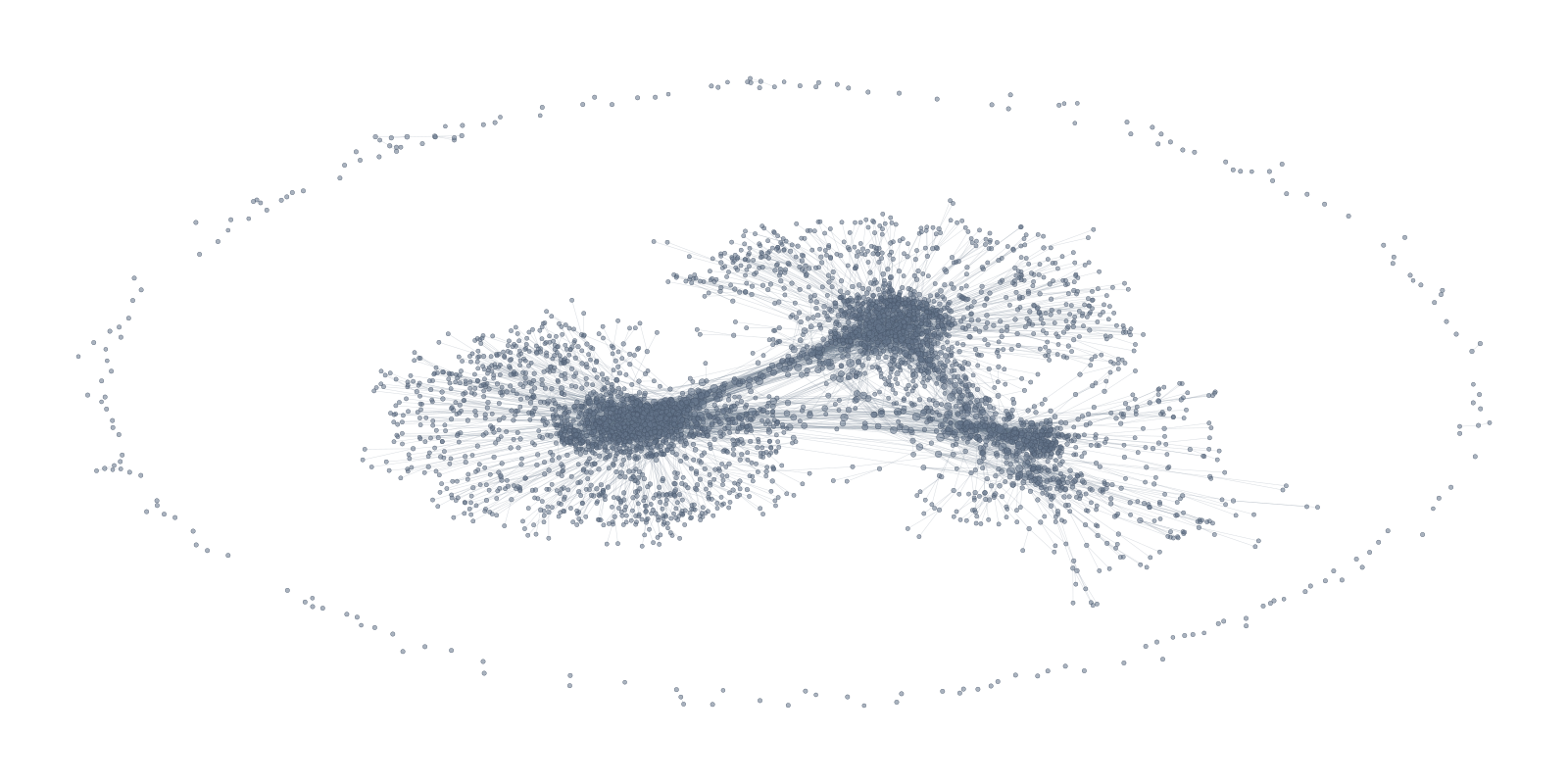
From documents to a knowledge graph
Information about people, places and events is scattered across judicial documents, with varying names, imprecise dates and connections that require cross-referencing sources.
The pipeline combines staged LLM extraction with a domain ontology, validation and entity resolution. Extracted relationships remain linked to the source passages from which they were derived.
Agentic research and spatial exploration
The research assistant supports queries over the graph and connections across documents. Its tools are also available to compatible external agents through MCP. Network, table and map views support investigation of relationships, events and transfers across time and space.
Traceability and uncertainty
The system preserves the original wording of approximate dates and distinguishes levels of geographic precision. Entity resolution routes ambiguous matches for review and keeps a record of decisions. Validation against a domain ontology is complemented by extraction of relationships it does not yet represent.
Research context
My thesis advisors are Edgar Altszyler and Luciano Del Corro. The work relies on close collaboration with Carolina Villella and Abuelas’ research team.
The Nexo-Memoria poster received a shared third-place award in the poster track at the 2nd South American NLP School in 2026.